

Water bottles are pretty much the few promo items that most people keep around. Do you know how those branded pens or tote bags eventually get tossed or left somewhere? Not these. Custom logo water bottles actually see regular use — from workouts to office breaks to commutes. It’s this daily visibility that makes them such a great idea whether you’re planning to hand them out for free or try selling them.
This guide caters to two groups: businesses that intend to use these bottles as branded giveaways or employee gifts, and brands looking to create a new product line. While the sourcing steps are pretty alike, design goals differ. We’ll touch on everything.
Who Orders Custom Logo Water Bottles — and Why
Knowing your place in the market helps you make smarter choices before you start reaching out to suppliers.
Corporate buyers include HR managers, marketing teams, and office admins. These folks typically order items like employee kits, client gifts, or trade show swag. For them, having a consistently branded product with fair minimum order quantities and reliable shipping times is important.
Retail and e-commerce sellers such as Etsy store owners, independent brand founders, and Amazon private-label merchants are the type of sellers who focus on flipping products. A standout design is crucial – it’s why they’ll sweat the details on something like the bottle design being unique, since it’ll make or break sales on an e-commerce shelf.
Niche product brands in fitness, outdoor, or wellness categories often sit somewhere between the two. They’re building a product that represents their brand identity, not just slapping a logo on a generic item. Packaging, product quality, and exclusivity all factor into the decision.
Lastly, schools, non-profits, and event organizers often come in with strict budget constraints, needing items mainly for specific uses such as fundraising, team apparel, or campaign materials. Therefore, they look for low minimum orders and straightforward custom work.
Logo Decoration Methods Compared
The right decoration method depends on your material, your logo complexity, your budget, and how long you need the branding to last. Here’s how the main options compare:
| Method | Visual Result | Best Materials | Durability | Best For |
|---|---|---|---|---|
| Screen Printing | Full color, flat | Plastic, aluminum | Medium | High-volume giveaways |
| Laser Engraving | Matte metallic finish, no color | Stainless steel, aluminum | Very high | Premium gifts, retail products |
| UV Printing | High-detail full color | Most surfaces | High | Complex logos, retail merchandise |
| Heat Transfer | Full-wrap coverage possible | Plastic primarily | Medium | Creative patterns, e-commerce |
| Embossing / Etching | 3D textured effect | Stainless steel | Very high | High-end custom lines |
A few things worth knowing before you decide:
Laser engraving shows the bare metal, giving it a unique look. It’s great for text-heavy logos with fine details. However, if your logo needs exact brand colors, engraving might not be ideal.
UV printing has gotten way better recently and can produce retail-quality results. It works awesome with gradients and complex art, though it does cost more per unit compared to screen printing.
Heat transfer is is popular for all-over printed designs, but can peel faster when the bottles go through lots of dishwasher cycles.
How Material Affects Your Customization Options
The material of the bottle affects many downstream like which decoration methods work best, durability of the branding, and the type of buyer the finished product attracts.
Stainless steel is super versatile when it comes to customizing. It works great with laser engraving, UV printing, and the double-wall vacuum insulation makes it perfect for high-end positioning. If you’re looking to build a retail brand or want some fancy executive gifts, stainless steel is definitely your best option.
Then Tritan plastic, which is BPA-free and shatter-resistant. This is lighter than stainless steel. It’s ideal for those big giveaways where cost is a priority but not luxury. Full-color UV printing and screen printing turn out great on Tritan bottles. But if you plan to laser engrave, this might not be the best pick since there’s no metal underneath to show.
Aluminum is right in the middle when it comes to price and feel. The thing with aluminum is that screen printing doesn’t always stick consistently, UV printing does better here. Oh, and it dents easier too, so it may not be the best for things displayed in stores.
Retail sellers especially need to keep in mind the product quality affects returns and customer reviews. If something looks good in pictures but feels flimsy in real life, expect a lot of bad feedback. So, getting samples beforehand and giving them a try can save a lot of trouble later.
Design Ideas: What Works for Merchandise vs. Giveaways
This is where the two use cases diverge most.
For Branded Giveaways
When it comes to brand visibility, simpler designs work best. A clean logo that can survive in just one color is key. This type of logo pops more on various bottle colors and sizes compared to something complicated with lots of colors.
Practical additions that increase the functional value of a giveaway bottle:
- Your website URL or social handle printed small near the base
- A tagline that reinforces your brand message
- Your brand’s primary color as the bottle color, so the object itself signals the brand
For Retail and Merchandise
When standing out in a crowded marketplace, an item needs something special to catch the eye. If you just slap a generic logo on a plain bottle, it won’t make you stand out in a lineup of competitors.
Here are some things that retailers can actually use:
First off, catering to a specific group works wonders. Like making art or text that trail runners or plant parents would vibe with. Really drilling down on a particular community helps build a loyal fan base.
Secondly, releasing products in unique colors and letting them sell out quickly makes folks want to grab what’s left before it’s gone. This creates a rush that normal, everyday items just don’t trigger.
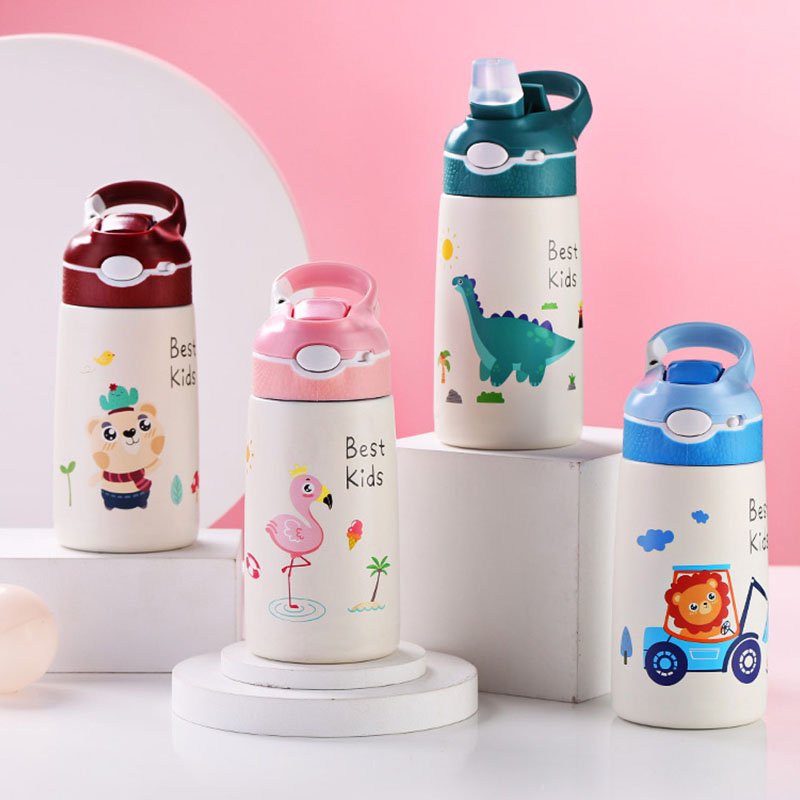
Covering bottles in full-wrap prints catches people’s attention too. Thanks to heat transfer printing, you can decorate the whole thing easily, unlike with other methods. More coverage equals more chances to wow someone.
Lastly, remember how important packaging is. Making unboxing a fun experience boosts the overall value of what’s inside. Even a $25 bottle can feel extra special if presented nicely in a sleek matte black box.
If you don’t have a design yet: Canva does okay for basic logos and layout designs. There are also new AI tools (such as Midjourney, Adobe Firefly) for generating pattern artwork or illustrative elements, they’re helpful for creating initial ideas. For anything you’re putting on a retail product at scale, a professional designer or a vector cleanup service is worth the cost. Blurry or poorly exported artwork will come back to haunt you at production.
Getting Your Logo Ready
Before sending anything to a supplier, check these things.
File format. You need vector files like AI, EPS, or SVG for suppliers. These types maintain quality no matter the size. While JPEG and PNG are okay just to preview stuff, not for actual production. If you’ve only got a PNG, get a designer or an auto-trace tool to convert it, but complicated logos might not convert perfectly.
Next up, color mode. For precision in color, such as screen printing, always go with Pantone (PMS) color codes. CMYK is good for UV printing. But keep in mind, RGB is solely for screen usage, not for making physical items.
Lastly, minimum line weight. Super thin lines in a logo could vanish in laser engraving or just look messy in screen printing at tiny sizes. It’s best to ask what the supplier’s line weight requirements are to avoid issues later on.
Questions to Ask Your Supplier Before Ordering
Not all suppliers are set up the same way. Here’s what to ask before you commit.
If You’re Ordering for Corporate Gifting
- What’s the MOQ? Many factories start at 100–500 units for custom orders; some work with smaller runs at a higher per-unit cost.
- Can I get a physical sample before production? A digital proof shows you the artwork; a sample shows you the actual product. For large orders, always request one.
- What certifications do you hold? For bottles that will be used for drinking, look for BPA-free documentation, and ideally FDA (US) or LFGB (EU) certification for food-contact compliance.
- What’s the production and shipping lead time? Custom orders typically take 3–6 weeks. If you have a hard event deadline, build in buffer.
If You’re Building a Product Line to Sell
- Can I customize beyond standard shapes and colors? Many factories offer catalog items with logo placement only. If you want a unique silhouette or a non-standard color, confirm early whether that’s possible and what the tooling cost looks like.
- Do you offer custom retail packaging? A branded gift box or sleeve changes how the product is perceived and its price point. Not all manufacturers offer this in-house.
- Is my design exclusive? For retail products, you don’t want your supplier selling the same design to other buyers. Ask directly whether they will protect your artwork or colorway.
- Can I reorder in small quantities? If you’re testing the market, you need the flexibility to reorder 50–100 units rather than 500. Some factories accommodate this, many don’t.
Final Thoughts
Ordering custom water bottles isn’t complex, but making decisions about materials, decoration, and design matters a lot. What you want to achieve guides these choices. A giveaway bottle differs from a retail product when it comes to design, toughness, and how it’s packaged. Even if both are made together, their goals are distinct.
So, whether it’s for promotion or sale, start by choosing a supplier wisely. The best suppliers ask about your needs upfront rather than just giving prices. They inquire about usage, audience, and appearance requirements, which helps ensure you get what you actually want.

Mountop make custom logo water bottles for corporate clients and brands, handling both product and branding. From single-color laser engraving to colorful printing and retail packing. Get in touch for a quote!
FAQ
What file format should you use when submitting your logo?
You’ll need vector formats like AI, EPS, or SVG for production. Although PNG and JPEG are okay for reviewing proofs, they aren’t good for printing or engraving. So, if you only have a raster file, talk to your supplier or a freelance designer about converting it first.
Should I choose laser engraving or screen printing?
Think about what you’re actually printing on and what your design needs are. Laser engraving gives a premium, permanent result and is great for stainless steel bottles. However, you’re limited to just one color. In contrast, screen printing does well for full-color logos on plastic or aluminum at larger volumes. Plus, if accuracy with your specific brand colors is important, go with screen printing or UV printing over laser engraving.
Is it alright to request a sample before ordering a bunch of these bottles?
Absolutely, and it’s highly recommended! Reputable manufacturers typically offer pre-production samples sometimes for a minor fee. For orders over a few hundred units, getting that physical sample is crucial. It helps you check the print quality, feel, and finish before committing to a large order.
How do I choose a bottle color that works with my brand?
Choosing the right bottle color that matches your brand can be tricky, so here’s how to start. Begin by considering your brand’s main color and then find the closest bottle finish available. Usually, if an exact match doesn’t work out, going with a neutral color like black, white, or matte gray can still fit nicely with most logo colors. Just make sure to avoid combos where the logo and the bottle are way too similar – something like a dark green logo on a dark bottle might just blend in and vanish. When in doubt, ask your supplier for a color swatch before finalizing.
Are these custom logo water bottles safe to put in the dishwasher?
It depends on both the bottle construction and the decoration method. Most stainless steel double-wall bottles are not dishwasher safe. High heat can damage the vacuum seal and affect insulation performance. Laser engraving is the most dishwasher-resistant decoration; screen printing and heat transfer are more likely to fade or peel over time with repeated machine washing. Hand washing is the safe default for any decorated bottle, and worth noting in your product care instructions if you’re selling.

